
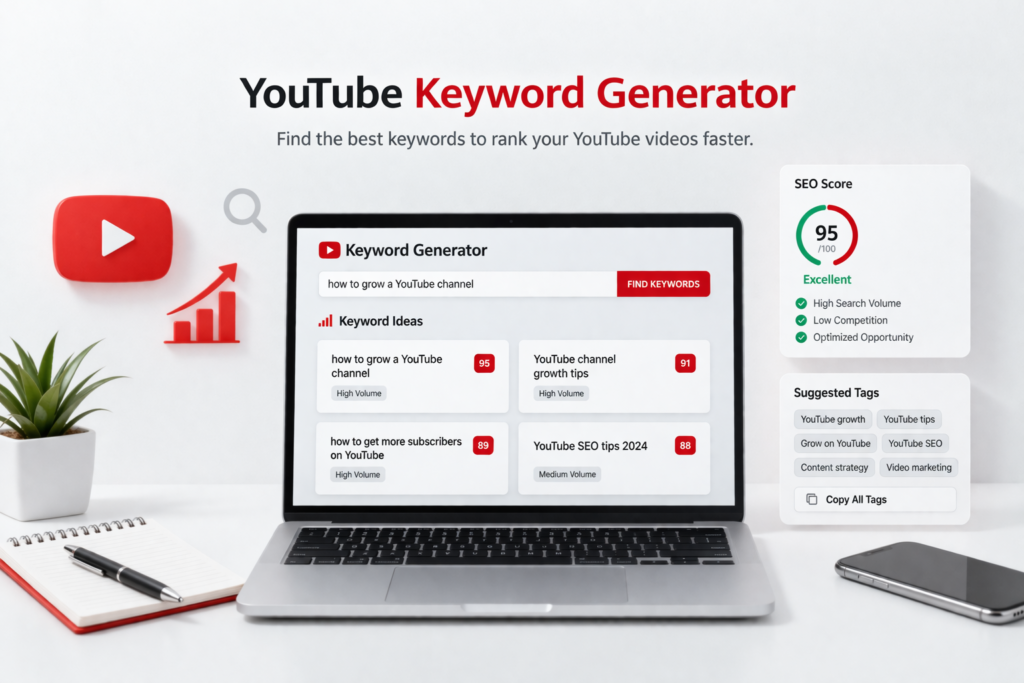
YouTube Keyword Generator
Generate powerful SEO-optimized keywords in your preferred language to boost video ranking and organic reach on YouTube.
📜 Keyword History
| Date & Time | Topic | Language | Country | Keywords Preview | Action |
|---|---|---|---|---|---|
| No history yet. Generate keywords to track your searches. | |||||
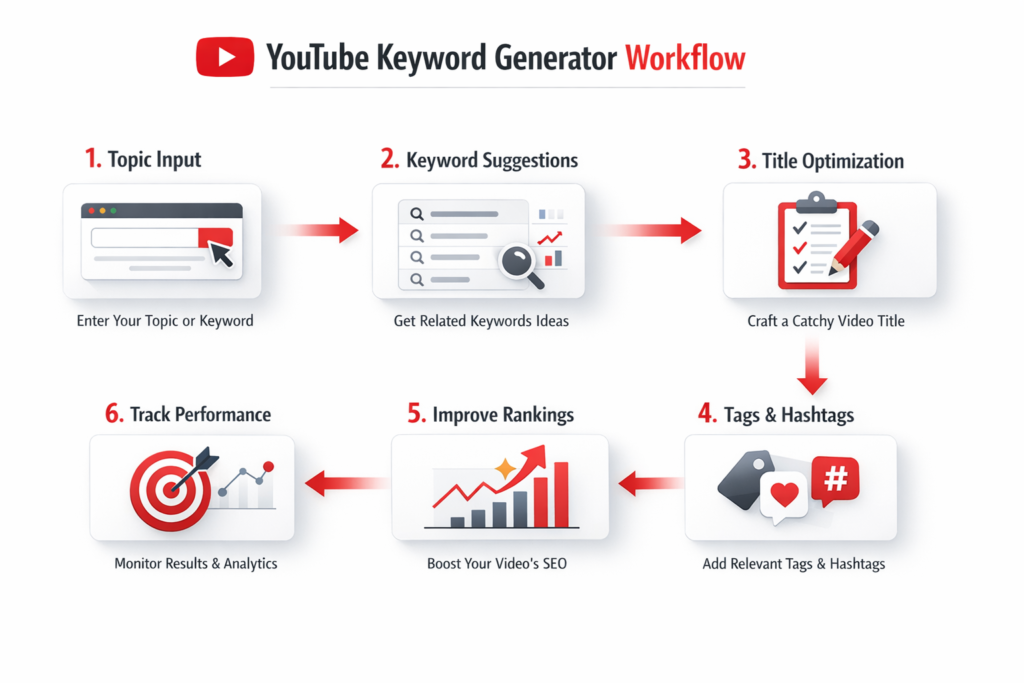
Using a YouTube keyword generator is one of the best things you can do if you want more views, higher rankings, and faster channel growth. Many creators upload good videos, but they still struggle to get views because they target the wrong keywords. That is where a YouTube keyword generator helps. It shows what people are actually searching for on YouTube, so you can create videos that match real user demand.
In this guide, you will learn what a YouTube keyword generator is, how it works, why it matters, and how to use it the right way. You will also get tips, examples, a comparison table, pros and cons, FAQs, internal linking suggestions, and image prompts. This article is written in simple, human-friendly English and is optimized for SEO, readability, and WordPress publishing.
Internal Links
- YouTube Title Generator
- YouTube Description Generator
- YouTube Tags Generator
- YouTube Hashtag Generator
- Age Calculator
What Is a YouTube Keyword Generator?
A YouTube keyword generator is a tool that helps you find search terms people use on YouTube. These keywords are important because they help creators understand what viewers want to watch. When you know the right keywords, you can create better titles, descriptions, tags, and hashtags for your videos.
For example, instead of uploading a video with a simple title like “YouTube Tips,” a keyword tool may suggest stronger phrases like
- YouTube SEO tips for beginners
- how to rank YouTube videos
- best YouTube keywords for views
- YouTube keyword research tool
These suggestions help you target better search phrases. As a result, your video has a better chance of appearing in YouTube search results.
Why a YouTube Keyword Generator Matters
YouTube is one of the biggest search engines in the world. Every day, millions of videos are uploaded. Because of this, it is not enough to make a good video. You also need to make sure people can find it.
A YouTube keyword generator matters because it helps you:
- Find better video ideas
- Discover what viewers are searching for
- Improve your video title
- Write a stronger description
- Add relevant tags and hashtags
- Reach the right audience
- Increase your chances of getting more views
In simple words, keyword research helps you stop guessing. Instead of making random content, you create videos based on real search demand.
External Links
How a YouTube Keyword Generator Works
A YouTube keyword generator usually starts with one basic word or phrase. This is called a seed keyword. Then the tool expands that topic and gives you a list of related search terms.
For example, if your seed keyword is “fitness tips,” the tool may show the following:
- fitness tips for beginners
- fitness tips at home
- fitness tips for weight loss
- daily fitness motivation
- best fitness routine for beginners
This process helps you understand which topics are broad and which are more specific. Specific phrases are often better because they match clear search intent.
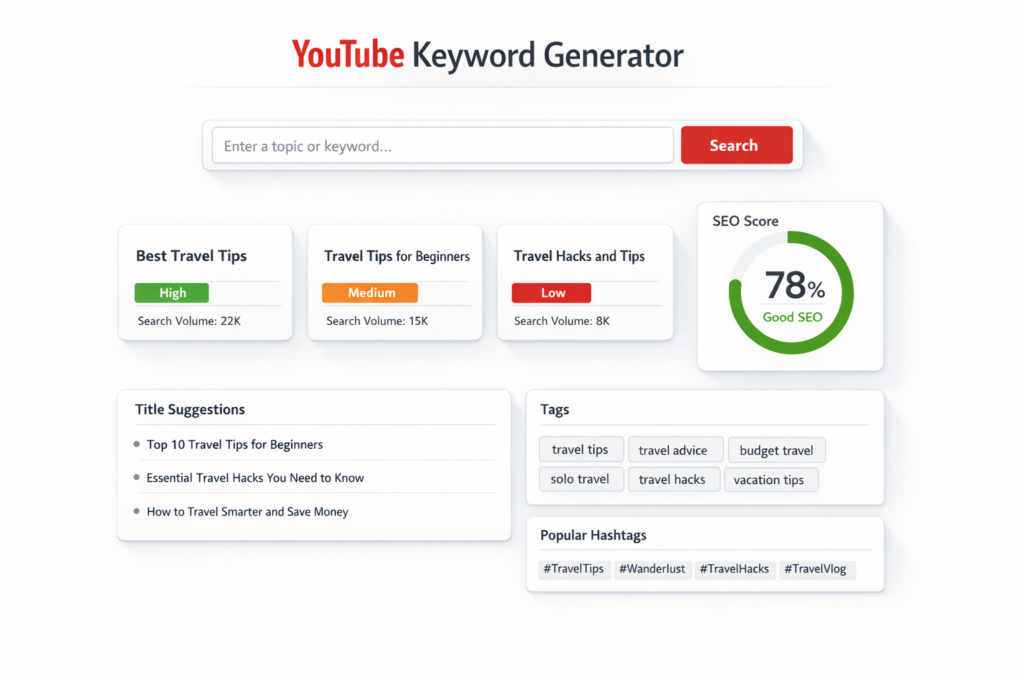
Some tools may also show:
- SEO score
- keyword popularity
- competition level
- related tag ideas
- trending phrases
This makes it easier to choose the best keyword for your next video.
How to Use a YouTube Keyword Generator Step by Step
1. Start With a Broad Topic
First, enter a simple topic into the tool. This could be anything related to your niche, such as cooking, gaming, finance, study tips, tutorials, news, or technology.
For example:
- cooking recipes
- YouTube growth tips
- student motivation
- best video editing apps
2. Review the Keyword Suggestions
Next, read the keyword suggestions carefully. Look for phrases that match your video topic and audience intent. Do not just choose the most common keyword. Choose the one that best fits your content.
3. Focus on Long-Tail Keywords
Long-tail keywords are longer and more specific. They usually have better ranking chances, especially for new channels.
For example:
- Broad keyword: YouTube tips
- Better keyword: YouTube tips for small channels
- Best keyword: YouTube SEO tips for beginners in 2026
Long-tail keywords are easier to rank for because they target a smaller but more focused audience.
4. Use the Keyword in Important Places
After choosing your keyword, place it naturally in the most important parts of your video SEO:
- Video title
- Description
- Tags
- Hashtags
- File name before upload
- Spoken words in the video
- Thumbnail text if suitable
This helps YouTube understand what your content is about.
5. Match Search Intent
This is very important. Your video should match what the viewer expects.
If the keyword says how to, your video should teach something.
If the keyword says best, your video should compare options.
If the keyword says review, your video should give honest feedback.
When your video matches search intent, viewers stay longer, and this can improve performance.
6. Track Results and Improve
Finally, check how your videos perform. Use YouTube Analytics to see which keywords bring more views, watch time, and clicks. Then make more videos around similar topics.
SEO is not just about publishing once. It is about learning what works and improving over time.
Best Keyword Types to Target With a YouTube Keyword Generator
Not all keywords are the same. Some are better for tutorials, while others work well for trends or product reviews. Here are the main keyword types you should target.
1. Informational Keywords
These are great for tutorial content and educational videos.
Examples:
- how to edit YouTube videos
- how to increase YouTube views
- how to use YouTube tags
2. Problem-Solving Keywords
These target user pain points and often get strong engagement.
Examples:
- why my YouTube videos get no views
- how to fix low CTR on YouTube
- why YouTube Shorts are not getting views
3. Comparison Keywords
These are useful when viewers want to compare tools, apps, or methods.
Examples:
- TubeBuddy vs VidIQ
- best free YouTube keyword generator
- YouTube tags generator vs keyword tool
4. Trending Keywords
These can bring quick traffic if you create content at the right time.
Examples:
- YouTube SEO trends 2026
- YouTube algorithm update
- trending YouTube Shorts ideas
5. Long-Tail Keywords
These are best for small channels because they are specific and less competitive.
Examples:
- free YouTube keyword generator for beginners
- YouTube keyword generator for gaming videos
- best YouTube SEO keywords for small channels
YouTube Keyword Generator Comparison Table
| Feature | Basic Keyword Ideas | Advanced Keyword Research | Best Use Case |
|---|---|---|---|
| Simple Suggestions | Yes | Yes | Beginners |
| Long-Tail Keywords | Limited | Strong | Niche content |
| SEO Score | Sometimes | Usually | Better optimization |
| Competition Insight | Rare | Often included | Smarter keyword choice |
| Tag Suggestions | Yes | Yes | Metadata improvement |
| Trend Discovery | Limited | Better | Timely video ideas |
This table shows that even simple tools are helpful, but advanced tools can give you deeper keyword insights.
How a YouTube Keyword Generator Helps Different Creators
A YouTube keyword generator is useful for many types of creators.
For Beginners
New creators often do not know what topics to target. A keyword tool gives them clear direction and helps them avoid broad, hard-to-rank phrases.
For Vloggers
Vloggers can use keyword tools to create titles that match what people search for, such as travel vlogs, daily routines, or budget trip videos.
For Educational Channels
Teachers and tutorial creators can find better search-friendly phrases like “how to solve algebra easily” or “basic Excel tutorial for beginners.”
For Gaming Channels
Gaming creators can target game-specific search phrases, challenge keywords, or trending game update topics.
For Finance and News Creators
These creators can use keyword tools to discover high-interest searches related to money, jobs, schemes, and current topics.
No matter your niche, keyword research helps you create content with a clear SEO direction.
Pros and Cons of Using a YouTube Keyword Generator
Pros
- Helps you find better video ideas
- Improves YouTube SEO
- Saves time during content planning
- Makes titles and descriptions stronger
- Great for beginners and experts
- Helps you discover trending topics
- Supports long-term channel growth
Cons
- Some tools show broad suggestions only
- Not every keyword will bring traffic
- SEO alone is not enough without good content
- Keyword stuffing can make titles look unnatural
Overall, the pros are much stronger than the cons. A keyword tool is a helpful guide, but your video quality still matters.
Expert Tips to Get Better Results
Here are some simple expert tips to get more value from a YouTube keyword generator:
Use One Main Keyword Per Video
Do not try to target too many keywords in one video. Focus on one primary keyword and support it with related phrases.
Choose Keywords With Clear Intent
Pick keywords that clearly show what the user wants. This helps your content match search intent better.
Combine Evergreen and Trending Topics
Evergreen keywords bring steady traffic over time, while trending keywords can bring fast traffic. A good strategy uses both.
Study Competitor Titles
Search your keyword on YouTube and look at the top-ranking titles. This can help you understand what works in your niche.
Update Old Videos
If you have old videos that are not performing well, improve their title and description using better keywords.
Pair SEO With Good Thumbnails
Keywords help your video appear in search, but thumbnails help people click. Use both together.
Common Mistakes to Avoid
Many creators use keyword tools, but they still make SEO mistakes. Here are some common ones to avoid:
- Choosing keywords that are too broad
- Ignoring long-tail opportunities
- Writing misleading titles
- Stuffing the same keyword everywhere
- Skipping keyword research for Shorts
- Writing weak descriptions
- Not testing different keyword angles
Avoiding these mistakes can improve your content quality and your video rankings.
FAQ: YouTube Keyword Generator
1. What is a YouTube Keyword Generator?
YouTube keyword generators help creators find the words people use to search for things on YouTube. It helps with video SEO by suggesting better keywords for tags, titles, and descriptions.
2. Is a free YouTube keyword generator useful?
A free YouTube keyword generator is very helpful for people who are just starting out. It can help you come up with basic keyword ideas and make your content planning better.
3. How do I use a YouTube keyword generator correctly?
Begin with a broad subject, look over the keyword suggestions, pick a long-tail keyword that fits, and use it naturally in your title, description, tags, and hashtags.
4. Can a YouTube keyword generator increase views?
Yes, it can help you get more views by making your video easier to find in search results. But the quality of the thumbnail, the amount of time people spend watching it, and the value of the content are also important.
5. What kind of keywords are best for small channels?
Long-tail keywords are usually better for small channels because they are less competitive and more specific.
6. Should I use the same keyword everywhere?
You should use your main keyword in important places, but don’t use it too often. Your writing should still sound like a person and be easy to read.
7. Is a YouTube Keyword Generator useful for YouTube Shorts?
Yes, it also works well for shorts. It can help you come up with better ideas for short-form content and find popular phrases.
8. How often should I do keyword research?
Before every important upload, you should look up keywords. You should also watch and update old videos on a regular basis.
Conclusion
If you want to grow your YouTube channel with smart SEO, a YouTube keyword generator is one of the best tools you can use. It helps you come up with better video ideas, write better titles and descriptions, and use tags that are more relevant. This makes it easier for your videos to get to the right people.
Don’t upload videos carelessly if you want your channel to grow steadily. To plan your content using actual search data, start using a YouTube keyword generator. Your channel has a far greater chance of expanding when you combine the appropriate keywords with high-quality videos and compelling thumbnails.